Blog

  • The Financial Benefits of DIY Interior Updates That Add Up Fast

    The Financial Benefits of DIY Interior Updates That Add Up Fast

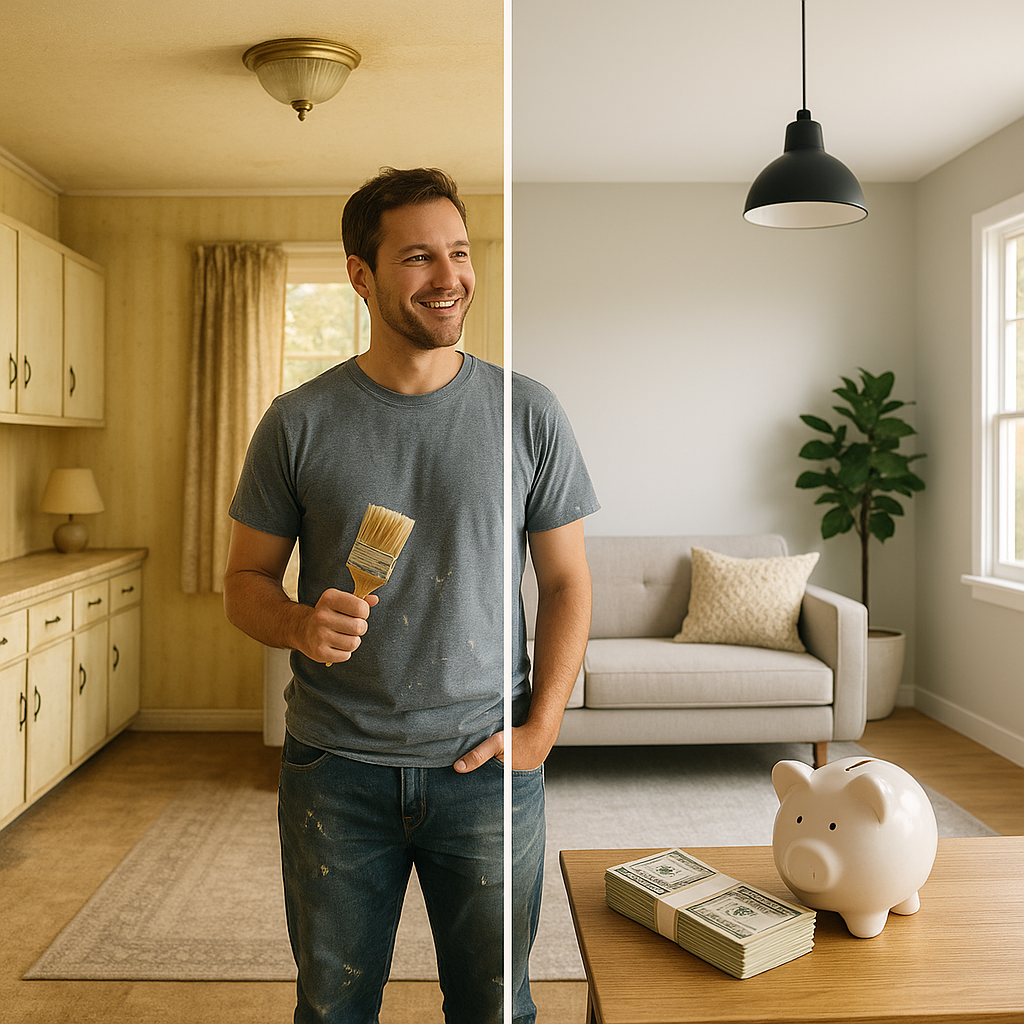
    Most homeowners assume that updating their home’s interior requires either a massive budget or hiring expensive contractors. But here’s the thing — some of the most impactful upgrades cost less than a dinner out, and the financial returns can be genuinely surprising. Whether you’re thinking about resale value, lowering your utility bills, or simply avoiding the slow creep of costly deferred maintenance, doing interior updates yourself adds up in ways that go far beyond just saving on labor.

    This isn’t about cutting corners. It’s about understanding where your money actually goes during a renovation — and taking back the portion that doesn’t need to leave your pocket in the first place.

    Why DIY Interior Updates Make Strong Financial Sense

    Labor is almost always the biggest line item in any renovation quote. On average, labor accounts for 40% to 65% of total project costs, depending on the trade and region. When you take that work on yourself — even partially — you’re not just saving money once. You’re compressing the payback period on every dollar of materials you spend.

    Consider a basic room repaint. A professional interior painter might charge between $2 and $6 per square foot, including labor. A DIY painter pays for materials only — typically $200 to $400 for a standard-sized room — and recaptures the rest. Over a full home, those savings compound quickly.

    Beyond the immediate savings, there’s a longer-term financial dynamic worth understanding: homes that look well-maintained and updated spend less time on the market and tend to attract stronger offers. Buyers respond emotionally to fresh interiors, and that emotional response translates directly into dollars.

    Does DIY Actually Save Money?

    The honest answer is: yes, but with some nuance. DIY unquestionably saves money on labor. The area where people sometimes lose ground is in mistakes — buying the wrong materials, having to redo work, or underestimating what a project actually involves. The key to making DIY financially worthwhile is choosing projects that match your current skill level and investing a little time in research before you start.

    For interior updates specifically — painting, installing peel-and-stick tile, swapping cabinet hardware, updating light fixtures, refinishing furniture — the learning curve is relatively gentle, and the margin for costly error is low. These are not the same as rewiring a panel or moving load-bearing walls. Interior cosmetic updates are precisely the category where DIY shines brightest from a financial standpoint.

    Studies from the National Association of Realtors consistently show that certain interior DIY projects return more than 100% of their cost at resale. Hardwood floor refinishing, for example, has historically shown one of the highest cost-to-value ratios of any home improvement — and it’s a project many determined homeowners tackle themselves.

    High-Return Interior Updates You Can Do Yourself

    Painting: The Highest ROI Update in Existence

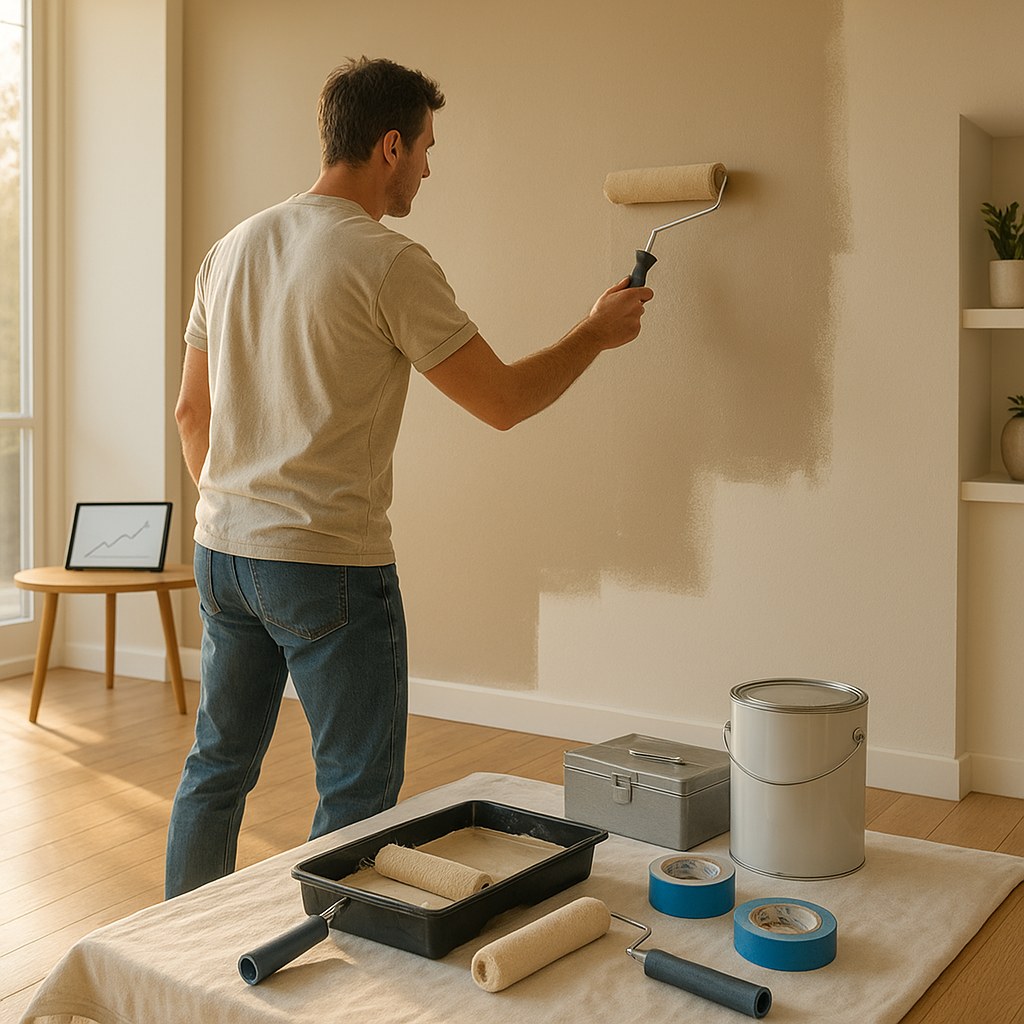
    Fresh interior paint is universally acknowledged as the single best return-on-investment update a homeowner can make. The materials are inexpensive, the skill requirement is accessible, and the visual transformation is dramatic. Real estate professionals routinely cite neutral, freshly painted interiors as one of the top factors in buyer perception and offer price.

    The financial math is simple: a gallon of quality interior paint costs between $30 and $60. A room typically requires two gallons. Even accounting for primer, brushes, and tape, the total outlay for a room rarely exceeds $150. A professional painter would charge $400 to $900 for the same room. That gap — $250 to $750 per room — is pure savings.

    Cabinet Hardware and Fixture Updates

    This is one of the most underrated high-value, low-cost updates available. Replacing dated brass cabinet pulls with brushed nickel or matte black hardware can transform a kitchen from a 1995 time capsule into something that looks intentionally designed. The cost? Between $1.50 and $5 per pull, with no tools required beyond a screwdriver.

    The Financial Benefits of DIY Interior Updates That Add Up Fast

    Light fixtures follow the same logic. An outdated flush-mount ceiling light can be swapped for a modern pendant or semi-flush fixture in under an hour, with fixtures available from $25 to $150. These small changes shift the perceived value of a space significantly — and that perception has real financial consequences when it comes time to sell.

    Flooring Updates on a Budget

    Flooring is where many homeowners stop short because they assume it’s contractor territory. But luxury vinyl plank (LVP) flooring has genuinely changed the DIY landscape. Modern click-lock systems require no glue, no nails, and no special tools. A motivated beginner can tile a 200-square-foot room in a weekend.

    The cost difference between DIY and professional installation for LVP flooring is typically $2 to $4 per square foot in labor alone. On a 1,000-square-foot main floor, that’s $2,000 to $4,000 back in your pocket — for work that’s genuinely learnable with a few hours of video research.

    What Does a $10,000 Bathroom Remodel Look Like?

    A professionally executed bathroom remodel typically costs $10,000 to $15,000 for a mid-range update. That budget covers demo, new tile, a vanity, toilet, fixtures, and labor — but labor often eats $4,000 to $6,000 of that total.

    A DIY approach to the same bathroom can look like this:

    • New vanity: $300–$600 (swappable without a plumber if you’re replacing like-for-like)
    • Peel-and-stick or groutable tile: $150–$400 for a standard bathroom floor
    • New toilet: $150–$350, installation is genuinely beginner-friendly
    • Updated fixtures (faucet, towel bars, mirror): $200–$400
    • Fresh paint: $50–$100
    • New light fixture: $50–$150

    Total material cost: roughly $900 to $2,000. The remaining $8,000 to $9,000 stays in your account. Even if you hire a plumber for an hour or two to handle anything involving supply lines, you’re still saving an enormous amount. The transformation, done with care and quality materials, can look indistinguishable from a professionally renovated bathroom.

    Understanding the 30% Rule for Renovations

    The 30% rule is a general guideline suggesting that renovation costs shouldn’t exceed 30% of the home’s current market value. The logic is straightforward: over-improving a home relative to the neighborhood sets a ceiling on what buyers will pay, regardless of how much was spent. A $100,000 renovation on a $200,000 home rarely returns full value — the market simply won’t bear it.

    DIY interior updates are a natural ally of this rule. Because you’re dramatically reducing the cost of each project, you can achieve a well-updated, market-competitive interior without approaching that 30% threshold. You get the visual and functional benefit of renovated spaces while keeping total investment well within a range that makes financial sense at resale.

    This is especially relevant for homeowners in established neighborhoods where home values have a natural ceiling. Rather than over-investing in contractor-level renovations, strategic DIY updates allow you to meet — and slightly exceed — buyer expectations without overcapitalizing.

    Which Home Upgrades Pay Off the Most?

    According to data from Remodeling Magazine’s annual Cost vs. Value Report, these interior upgrades consistently deliver strong returns:

    The Financial Benefits of DIY Interior Updates That Add Up Fast

    • Hardwood floor refinishing: Often returns over 100% of cost at resale
    • Minor kitchen updates (hardware, paint, new lighting): Can return 80–98% of investment
    • Interior paint: Consistently one of the highest-return projects available
    • Bathroom cosmetic updates: New fixtures, vanity, and tile can return 70–80%
    • Lighting updates: Relatively low cost, high impact on buyer perception

    Notice the pattern: these are all projects where the work itself is the primary cost driver — meaning DIY strips out the biggest expense and pushes the return even higher. A project that returns 80% of professional costs might return 95% or more when done yourself, simply because your material investment is so much lower than the total quoted price.

    How to Make an Old House Look Modern Without Remodeling

    One of the most common questions from homeowners is how to modernize a dated interior without tearing anything out. The answer lies in what designers call “surface-level updates” — changes that affect appearance without touching structure.

    Here’s a practical framework:

    • Update the color palette: Swap warm 2000s tones for current neutrals (greige, warm white, sage green). Paint is the fastest way to shift a decade’s worth of dated style.
    • Replace all visible hardware: Cabinet pulls, door knobs, hinges, and towel bars are the jewelry of a room. Modern finishes — matte black, brushed gold, brushed nickel — immediately signal a contemporary interior.
    • Modernize lighting: Ceiling fans with wood blades and brass accents, or any fixture with a frosted globe, can date a room significantly. Swapping these out is inexpensive and makes a large visual impact.
    • Update window treatments: Replace heavy curtains with linen-style panels or cellular shades. Light, airy window treatments make spaces feel larger and more current.
    • Regrout tile: Old grout that has discolored can make perfectly good tile look dated. Regrouting or using a grout pen to brighten existing grout lines is a very low-cost update with a surprisingly significant result.

    None of these require permits, contractors, or significant skill. All of them have a meaningful effect on how current and well-maintained a home feels to visitors and buyers alike.

    The Compounding Effect of Small Updates

    One of the most important things to understand about DIY interior updates is that their financial value isn’t just additive — it’s compounding. A freshly painted room with modern lighting and updated hardware looks like a renovated room. A freshly painted room alone looks like it just got painted. The combination creates a perception of overall quality that exceeds the sum of its parts.

    This compounding effect matters for both day-to-day enjoyment and eventual resale. Buyers move through a home making rapid emotional assessments. A series of small, well-executed updates creates a cumulative impression of a home that has been cared for and thoughtfully maintained — and that impression commands a premium.

    Final Thoughts

    The financial case for DIY interior updates isn’t complicated: labor is the most expensive component of any renovation, and cosmetic interior updates are the category where you can most safely and effectively replace that labor with your own time. The savings are real, the returns at resale are documented, and the projects themselves are genuinely accessible to most homeowners willing to invest a weekend and a little patience.

    From painting and hardware swaps to flooring installation and bathroom refreshes, the interior of a home offers more opportunity for high-return, low-risk DIY investment than almost any other area. Start with one project, build confidence, and the financial benefits — and the improved space you live in — will accumulate faster than most people expect.

  • Transform Your Space: The Subtle Art of Home Interiors

    Transform Your Space: The Subtle Art of Home Interiors

    Home interiors go beyond just picking out furniture and some decor. They really show who lives there. A good design makes the place look nice. It feels full of life too. Plus its functional in a way that matches the people inside. Each room has its own kind of energy. When you put care into it that energy can spark ideas or help you relax. It even brings calm on busy days. The whole thing with home interiors is balancing looks and real use. A space might shine in a magazine. But it has to fit your everyday life too. Take a cozy living room for instance. It should pull you in for talks or those lazy Sundays. A bedroom though turns into a quiet spot right when you walk in.

    Colors shape how you feel in big ways. Thats why picking the palette matters a lot. Soft neutrals or pastels give off a calm minimal feel. Deeper shades add some drama and warmth instead. Textures bring more layers to it all. They turn a flat room into something richer and welcoming. Think about a cold bare floor versus one with a soft rug on top. Natural light changes everything in the home too. Sunlight hitting the room at different times highlights stuff. It makes areas seem larger. It can lift your mood even.

    Solid interiors avoid chasing every trend out there. They focus on making it personal. Your home should change as you do. That photo frame by the bed tells part of it. Books piled near the couch add more. Art on the wall fills in the rest. Interiors hit hardest when style mixes with real meaning. Blending old items and new ones gives a lived in vibe. It feels real not like a setup. Its about curating things carefully. Not piling up junk. Every piece should have a point. Maybe its useful or just feels right emotionally.

    Little details pack a punch more than youd expect. How you place furniture opens up a room or makes it feel tight and messy. Curtains decide how light comes in. That shifts the whole mood quick. Flooring sets the base for the homes feel. Warm wood works for cozy spots. Sleek tiles suit modern setups. Textured stone brings a rustic earthy touch. Layering lights textiles and small decor builds depth. It makes the home feel full not flat.

    In the end designing interiors skips the perfect Pinterest look. Its about a spot where you can just be yourself comfortably. The space backs your routine. It stirs up some inspiration too. Your home ought to be a place you want to come back to each day. One that gives peace joy and a bit of pride. No matter if youre overhauling the whole thing or tweaking one area. The point is choices that match your own personality. When it clicks interiors turn a house into a real haven. Every moment there gets a touch more special because of how the space is.