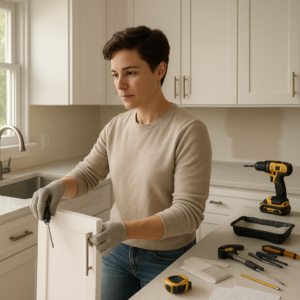

Every homeowner has heard the advice: “Do it yourself and save a fortune.” But is that actually true? The answer, like most things in personal finance, is more nuanced than a simple yes or no. Sometimes DIY home maintenance saves you hundreds — even thousands — of dollars. Other times, it costs you far more than hiring a professional would have in the first place.
In this article, we’re going to break down the real math behind DIY home maintenance. We’ll look at which tasks genuinely pay off, which ones are financial traps in disguise, and how to calculate whether your time and effort are actually worth the savings. By the end, you’ll have a clear framework for making smarter decisions about every repair and maintenance task that comes your way.
The True Cost of Home Maintenance: What the Numbers Say
Before we can determine whether DIY saves money, we need to understand what home maintenance actually costs. Financial experts commonly recommend budgeting 1% to 4% of your home’s value per year for maintenance and repairs. For a $350,000 home, that’s anywhere from $3,500 to $14,000 annually.
According to data from HomeAdvisor, the average homeowner spends roughly $3,000 to $6,000 per year on routine maintenance and unexpected repairs. A significant portion of that — often 30% to 50% — goes toward labor costs when professionals are hired.
That’s where the DIY argument gets compelling. If labor accounts for half of a $5,000 annual maintenance budget, doing the work yourself could theoretically save you $2,500 a year. Over a decade of homeownership, that’s $25,000. But the math isn’t quite that simple, and here’s why.
When DIY Home Maintenance Actually Saves You Money
Let’s start with the good news. There are plenty of home maintenance tasks where DIY is a clear financial win. These tend to share a few characteristics: they require minimal specialized tools, carry low risk of causing further damage, and don’t require permits or licenses.
High-Value DIY Tasks With Real Savings
Here are some of the most impactful DIY maintenance tasks, along with realistic cost comparisons:
- Replacing HVAC air filters: Professional cost: $75–$150 per visit. DIY cost: $10–$30 per filter. Annual savings: $200–$400.
- Caulking windows and bathrooms: Professional cost: $150–$400. DIY cost: $15–$40 in materials. Savings: $135–$360 per job.
- Cleaning gutters: Professional cost: $150–$350 per cleaning. DIY cost: essentially free if you own a ladder. Savings: $300–$700 per year (most homes need this twice annually).
- Weatherstripping doors and windows: Professional cost: $200–$500. DIY cost: $30–$80. Savings: $170–$420.
- Painting interior rooms: Professional cost: $400–$1,000 per room. DIY cost: $100–$300 per room. Savings: $300–$700 per room.
- Fixing a running toilet: Professional cost: $150–$300. DIY cost: $10–$25 for a flapper or fill valve. Savings: $140–$275.
- Installing a programmable or smart thermostat: Professional cost: $200–$500. DIY cost: $50–$250 for the unit. Savings: $150–$250, plus ongoing energy savings of 10–15% on heating and cooling bills.
Add these up, and a homeowner who handles just these seven tasks could save $1,500 to $3,000 per year. That’s real money — enough to fund a vacation, boost an emergency fund, or make extra mortgage payments. Many of these are also low cost DIY home improvements that can increase your property’s value while saving on labor.
The Compounding Effect of Preventive Maintenance
Here’s something the simple cost comparisons miss: DIY maintenance often saves money in ways that don’t show up immediately. When you regularly change your HVAC filter, your system runs more efficiently and lasts longer. When you caulk around windows, you prevent water intrusion that could lead to thousands in mold remediation or structural repair.
A study by the National Association of Home Builders found that every $1 spent on preventive maintenance saves approximately $4 in future repair costs. That means the $20 you spend on caulk today could be preventing an $80 repair down the road — or more.
When DIY Costs You More Than It Saves
Now for the other side of the equation. DIY home maintenance can backfire — sometimes spectacularly. Understanding when this happens is just as important as knowing when to grab your toolbox.
The Hidden Costs Most People Forget
When calculating DIY savings, most homeowners only compare the professional’s quote to the cost of materials. But the true cost of DIY includes several factors that are easy to overlook:
- Your time: If a task takes you 6 hours and a professional could do it in 2, you need to factor in what your time is worth. If you earn $40 per hour at your job, those 6 hours represent $240 in opportunity cost.
- Tools and equipment: That $50 plumbing repair might require a $75 pipe wrench you’ll use once. Suddenly the savings evaporate.
- Mistakes and rework: According to a survey by ImproveNet, roughly 63% of homeowners who attempted a DIY project regretted at least one of them, and the average cost to fix a DIY mistake was $310.
- Safety risks: Emergency room visits from DIY injuries cost an average of $1,500 to $3,000, not counting lost work time.
- Voided warranties and insurance issues: Some DIY work can void manufacturer warranties or create problems with homeowner’s insurance claims if the work doesn’t meet code.
Tasks Where DIY Is Usually a Bad Financial Bet
Certain home maintenance tasks almost always cost more when done incorrectly than they would have cost to hire out in the first place:
- Electrical work beyond changing outlets or light fixtures: Mistakes can cause fires, and unpermitted electrical work can create serious problems when selling your home.
- Roof repairs: The risk of falls, the potential for improper repairs that lead to leaks, and the specialized knowledge required make this a poor DIY candidate for most people.
- Major plumbing work: A botched pipe repair can cause water damage costing $5,000 to $70,000, according to insurance industry data.
- Structural modifications: Removing or altering load-bearing walls without proper engineering can compromise your home’s integrity.
- HVAC system repairs: Beyond filter changes, HVAC work often requires specialized tools, refrigerant handling certifications, and diagnostic expertise.
- Gas line work: This should always be left to licensed professionals. The risks are simply too high.
How to Calculate Whether DIY Is Worth It for You
Rather than relying on blanket rules, use this simple framework to evaluate any home maintenance task:
The DIY Value Equation
Here’s a practical formula you can apply to any project:
Net DIY Savings = (Professional Cost) − (Materials + Tool Costs + Value of Your Time + Risk-Adjusted Cost of Potential Mistakes)
Let’s walk through an example. Say your water heater needs to be replaced:
- Professional installation cost: $1,800 (unit + labor)
- DIY materials (water heater unit): $1,000
- Tools you need to buy: $75
- Your time (8 hours at $35/hour): $280
- Risk adjustment (moderate risk of improper installation, potential water damage): $200 estimated
Net DIY Savings = $1,800 − ($1,000 + $75 + $280 + $200) = $245
In this case, you’d save $245 — but you’d also take on the risk of a bad installation, potential code violations, and the physical demands of moving a heavy water heater. For many people, that $245 doesn’t justify the risk and effort. For others with plumbing experience, it might.
Now compare that to cleaning your gutters:
- Professional cost: $250
- DIY materials: $0 (you already own a ladder and gloves)
- Your time (2 hours at $35/hour): $70
- Risk adjustment (low if you’re comfortable on a ladder): $25
Net DIY Savings = $250 − ($0 + $70 + $25) = $155
That’s a much clearer win, especially since you’ll do it twice a year.
Questions to Ask Before Every DIY Project
Before starting any home maintenance task, run through these questions:
- Do I have the skills and knowledge to do this correctly the first time?
- Do I already own the necessary tools, or will I need to buy or rent them?
- What’s the worst-case scenario if I mess this up, and what would it cost to fix?
- Does this task require a permit or licensed professional in my area?
- Could doing this myself void a warranty or create insurance complications?
- Is my time better spent elsewhere — either earning money or on higher-value activities?
If you answer these honestly, the right decision usually becomes clear.
Building a Smart Hybrid Approach
The homeowners who save the most money aren’t the ones who DIY everything or the ones who hire out everything. They’re the ones who strategically choose which tasks to handle themselves and which to delegate.
The 70/30 Rule
A practical guideline many financially savvy homeowners follow is the 70/30 rule: aim to DIY roughly 70% of your routine maintenance tasks and hire professionals for the remaining 30%. The 70% includes things like filter changes, caulking, painting, basic landscaping, gutter cleaning, and minor repairs. The 30% includes electrical, major plumbing, roofing, HVAC, and structural work.
Using this approach on a $5,000 annual maintenance budget, you might spend $1,500 on professional services and $500 on DIY materials, saving approximately $3,000 per year compared to hiring everything out.
Invest in Skills That Pay for Themselves
One of the best financial moves a homeowner can make is investing time in learning high-value maintenance skills. A free YouTube tutorial on fixing a running toilet takes 15 minutes to watch and saves you $150 to $300 every time you use that knowledge. Learning to patch drywall, unclog drains, re-caulk a bathtub, or replace a light fixture are all skills that pay dividends for decades.
Consider starting with the tasks that come up most frequently in your home and gradually expanding your skill set. Each new skill you add increases the percentage of maintenance you can handle yourself — and the money stays in your pocket. If you’re ready to take the next step, there are also smart DIY renovations that build equity beyond routine upkeep.
Common DIY Myths That Cost Homeowners Money
Let’s clear up a few persistent misconceptions:
Myth 1: “DIY is always cheaper.” As we’ve shown, once you factor in tools, time, and the cost of potential mistakes, DIY isn’t always the economical choice. The savings are real for the right tasks, but they’re not universal.
Myth 2: “If I can watch a video on it, I can do it.” YouTube is an incredible resource, but watching a 10-minute video doesn’t replicate years of professional experience. Some tasks have nuances that only become apparent when something goes wrong.
Myth 3: “Hiring a professional is always a waste of money.” A skilled professional doesn’t just do the work — they bring expertise that can identify problems you didn’t know existed, ensure code compliance, and often complete the work in a fraction of the time it would take you.
Myth 4: “Small problems can wait.” Deferred maintenance is one of the most expensive mistakes homeowners make. A small leak ignored for six months can turn into a $10,000 mold remediation project. Whether you DIY or hire someone, addressing issues promptly is almost always the cheaper path.
Frequently Asked Questions
How much should I budget for home maintenance each year?
The most commonly cited guideline is the 1% rule: set aside 1% of your home’s value annually for maintenance. For a $350,000 home, that’s $3,500 per year. Some experts recommend up to 4% for older homes or homes in harsh climates. If you handle many tasks yourself, you can often stay at the lower end of that range.
What home maintenance tasks should never be DIY?
As a general rule, avoid DIYing anything involving gas lines, major electrical work, structural modifications, roofing (beyond minor shingle replacement), and HVAC refrigerant handling. These tasks carry high risks of injury, property damage, or code violations that far outweigh potential savings.
Does DIY home maintenance affect my home’s resale value?
It can — in both directions. Well-executed DIY maintenance keeps your home in good condition, which supports its value. However, visibly poor DIY work, unpermitted modifications, or code violations discovered during inspection can reduce your home’s value or complicate a sale. If you’re planning to sell within a few years, be especially careful about the quality and legality of any DIY work.
How do I know if a repair is beyond my skill level?
A good litmus test: if you can’t clearly explain each step of the repair process before you start, you probably shouldn’t be doing it. Also consider the consequences of failure. If a mistake would cost more than $500 to fix or create a safety hazard, it’s usually worth hiring a professional.
The Bottom Line: DIY Saves Money When You’re Strategic
So, is DIY home maintenance actually saving you money? The honest answer is: it depends on what you’re doing, how well you do it, and how you value your time.
The math clearly favors DIY for routine, low-risk tasks like changing filters, caulking, painting, gutter cleaning, and minor repairs. These tasks alone can save the average homeowner $1,500 to $3,000 per year. Factor in the preventive maintenance multiplier — where every dollar spent on upkeep saves four dollars in future repairs — and the case for strategic DIY becomes even stronger.
But the math just as clearly favors hiring professionals for complex, high-risk, or specialized work. The cost of a botched electrical job, a leaking pipe repair, or a fall from a roof dwarfs any labor savings.
The smartest approach is a hybrid one: build your DIY skills for routine tasks, budget for professional help on complex jobs, and always run the numbers before deciding. When you do that consistently, DIY home maintenance isn’t just a way to save money — it’s one of the best financial habits a homeowner can develop.