

Most homeowners think about building equity in one of two ways: making mortgage payments and hoping the market goes up. But there’s a third lever that often gets overlooked — and it’s one you can actually control. Strategic DIY renovations can meaningfully increase your home’s appraised value, sometimes within weeks of completion. The key word is strategic. Not every project pays off equally, and knowing which ones deliver real returns versus which ones just eat your weekends is what separates smart home improvement from expensive wishful thinking.
This guide breaks down the renovations that genuinely move the needle on equity, how to approach them without overspending, and what the numbers actually look like when you do it right.
What Is Home Equity and Why Do Renovations Matter?
Home equity is the difference between what your home is currently worth and what you still owe on it. If your home appraises at $350,000 and you have $220,000 left on your mortgage, you have $130,000 in equity. That equity is real wealth — it can be borrowed against, converted when you sell, or used to qualify for better financing terms.
Renovations matter because they can increase the appraised value of your home independent of market conditions. While you can’t control whether home prices rise in your neighborhood, you can control whether your home stands out during an appraisal or a buyer walkthrough. A well-executed kitchen update or a finished basement adds tangible, measurable value that shows up on paper.
The DIY angle matters here more than people realize. When you hire out work, you pay for both materials and labor — often doubling or tripling the cost of a project. When you do quality work yourself, you capture that labor value directly as equity. A kitchen refresh that costs $8,000 in materials but would have cost $18,000 with contractors? That difference goes straight into your net worth.
What Renovations Increase Home Value the Most?
According to the Remodeling Magazine Cost vs. Value Report, certain projects consistently deliver the highest return on investment. The top performers tend to be ones that improve curb appeal, modernize high-traffic spaces, or address things buyers universally care about — kitchens, bathrooms, and energy efficiency.
Kitchen Updates (Minor, Not Full Remodels)
A full kitchen gut renovation rarely recoups its full cost — often returning around 60–70% of what you spend. But a minor kitchen remodel? That’s a different story. Replacing cabinet fronts, updating hardware, installing a new backsplash, and swapping out an outdated faucet can dramatically modernize a kitchen for a fraction of the cost. Minor kitchen remodels consistently show returns of 80–90% or better, and when you’re doing the labor yourself, you often come out well ahead.
Focus on what buyers see first: cabinet faces, countertops, lighting, and appliances. You don’t need to move walls or replace plumbing to make a kitchen feel brand new.
Bathroom Improvements
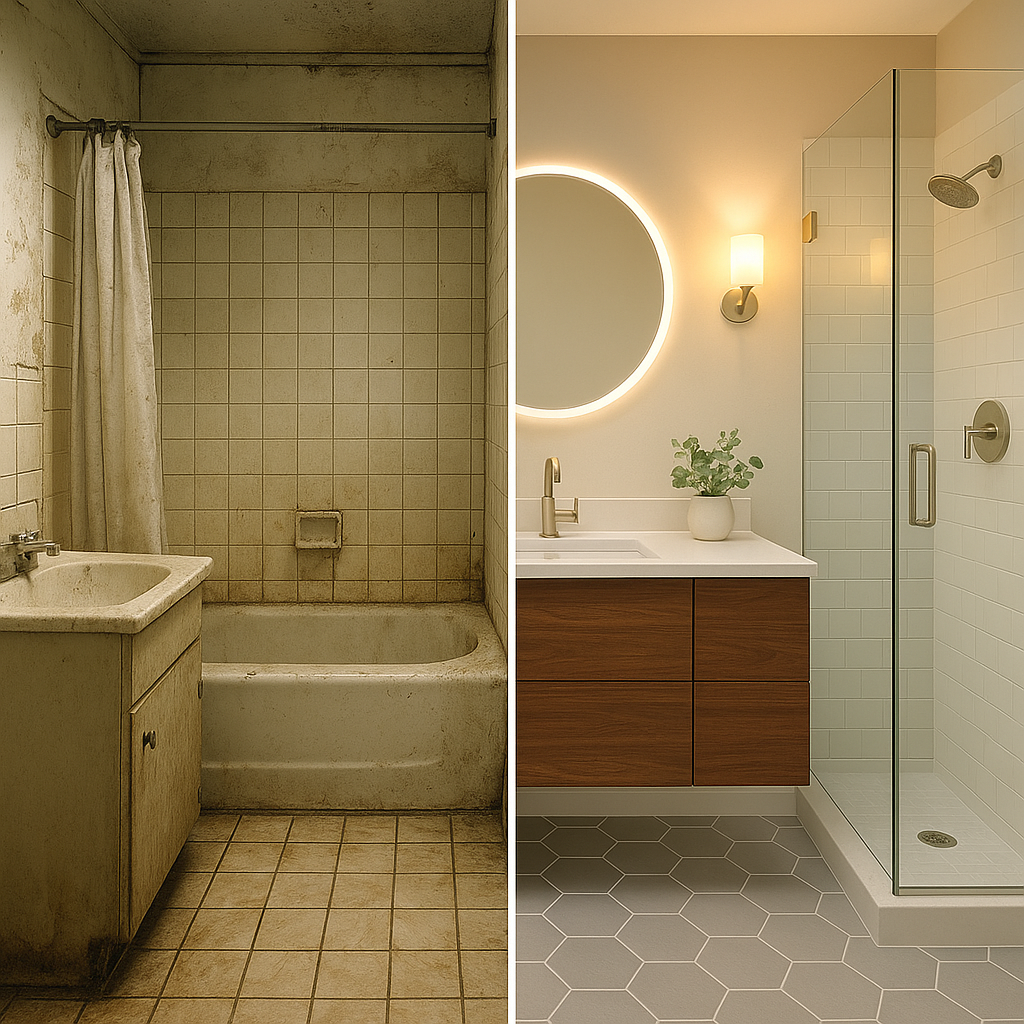
Bathrooms are the second most scrutinized space in any home sale. Replacing a dated vanity, re-grouting tile, installing a new toilet, or upgrading fixtures are all manageable DIY projects that photograph well and appraise well. A mid-range bathroom remodel typically returns 65–70% of costs, but smaller targeted updates — especially in a bathroom that was previously outdated — can return significantly more relative to what was spent.
Curb Appeal Projects
First impressions drive perceived value. Fresh exterior paint, new shutters, updated house numbers, landscaping cleanup, and a new front door are among the highest ROI projects in real estate. A steel entry door replacement, for instance, has historically returned over 100% of its cost in some markets. These are also largely DIY-friendly projects that require more time than skill.

Finished Basements and Attic Conversions
Adding usable square footage is one of the most reliable ways to build equity fast. A finished basement adds livable space to your home’s footprint, which directly impacts appraisals. While the upfront costs can be significant (insulation, drywall, flooring, lighting), doing the work yourself over time can make this one of the highest-value projects you undertake. In many markets, finishing a basement adds $20,000–$50,000 in value for a fraction of that in materials costs.
Understanding the 30% Rule for Renovations
The 30% rule is a guideline used by many financial advisors and real estate professionals: you generally shouldn’t spend more than 30% of your home’s current value on renovations, particularly if you’re planning to sell relatively soon. The reasoning is straightforward — renovations rarely add dollar-for-dollar value, so overspending on improvements in relation to your home’s worth puts you at risk of not recouping your investment.
For example, if your home is worth $250,000, pouring $100,000 into renovations is unlikely to push your value to $350,000. Markets have ceilings, and your home’s value is always somewhat anchored to comparable sales in your area. The 30% rule is a safeguard against over-improving — making your home significantly nicer than everything else on your street, which rarely pays off proportionally.
That said, the 30% rule is a starting point, not a hard law. In high-appreciation markets or if you’re planning to stay long-term, the calculus changes. The key is to always research comparable sales in your specific neighborhood before committing to major spending.
How Long Does It Take to Gain 20% Equity in Your Home?
This question depends on several factors: your down payment, your mortgage type, how fast your local market appreciates, and whether you’re actively improving the property.
If you put down 20% at purchase, you start with 20% equity on day one. But if you put down 3–5% (common with FHA or conventional loans), reaching 20% equity through payments alone can take 8–12 years at typical amortization schedules, assuming flat home prices.
Here’s where strategic renovations accelerate the timeline dramatically. If you purchase a home and immediately make $15,000 in targeted improvements that increase value by $25,000, you’ve added $10,000 in equity beyond what you spent — without waiting on the market or the mortgage schedule. In appreciating markets, this effect compounds: you’re improving a rising asset.
Some homeowners in value-add situations — buying homes that need work deliberately — reach 20% equity within one to two years through a combination of appreciation, mortgage paydown, and renovation-driven value increases. This is essentially the strategy behind the “house hacking” and “forced appreciation” concepts popular in real estate investing circles.
Smart DIY Strategies to Maximize Equity Gains
Prioritize Projects With Wide Appeal
Personal taste is the enemy of resale value. A bold accent wall in a unique color or a heavily customized bathroom might bring you joy, but it can actually reduce appeal for buyers. Stick to neutral palettes, timeless finishes, and broadly appealing design choices when renovating for equity. Think classic white subway tile, hardwood or luxury vinyl plank flooring, and clean, simple hardware. Understanding how interiors shape perception can help you make choices that resonate with the widest range of buyers.
Fix the Fundamentals First
No amount of cosmetic improvement compensates for a roof that’s showing its age, an HVAC system that’s struggling, or water damage that’s been ignored. Appraisers and buyers notice structural and mechanical issues immediately, and they discount value accordingly. Before investing in aesthetics, make sure the bones are solid. Replacing a water heater, fixing a leaking roof section, or addressing moisture in a crawlspace may feel unglamorous, but these projects protect and preserve the equity you already have.
Document Everything
Keep receipts, take before-and-after photos, and maintain a renovation log. When it comes time to sell or refinance, having documentation of completed work — especially permitted work — supports your appraisal and gives buyers confidence. Some improvements, like HVAC replacements or electrical upgrades, are much easier to verify and sell when you have paperwork.
Learn When to Hire Out
Skilled DIY is not always the answer. Electrical panel upgrades, structural changes, plumbing rough-in, and anything that requires permits in your jurisdiction should typically involve licensed professionals. Unpermitted work done incorrectly can actually decrease home value and create liability issues at sale. The goal is to maximize value, not cut corners that come back to bite you later.
How to Pull Equity Out of Your Home for Renovations
Once you’ve built equity, you may want to access it to fund the next phase of improvements. The three most common options are:
- Home Equity Loan: A lump-sum loan at a fixed interest rate, secured by your home’s equity. Good for large, one-time projects with a defined budget.
- HELOC (Home Equity Line of Credit): A revolving line of credit you draw from as needed, typically at a variable rate. Useful for phased renovations where you’re not sure of the exact total spend upfront.
- Cash-Out Refinance: You refinance your existing mortgage for more than you owe and take the difference in cash. Makes sense when current interest rates are favorable compared to your existing loan.
It’s worth noting that in many cases, interest paid on home equity loans and HELOCs used for home improvements may be tax-deductible — though tax laws change and individual situations vary, so consulting a tax professional before assuming deductibility is always wise.
One important caution: borrowing against your equity to fund renovations means you’re betting that the improvements will add more value than the interest you pay. This is usually true for high-ROI projects, but much less certain for purely aesthetic upgrades or renovations that over-improve the property relative to the neighborhood.
Renovation ROI at a Glance
To summarize what the data consistently shows, here are some DIY-friendly projects and their typical return on investment:
- Minor kitchen remodel: 80–90% ROI (higher when labor is DIY)
- Bathroom refresh: 65–75% ROI
- Exterior paint: 50–100% ROI depending on condition and market
- New entry door: 90–100%+ ROI
- Deck addition (wood): 65–75% ROI
- Basement finishing: 65–75% ROI, often higher in markets with limited square footage
- Landscaping improvements: 100–150% ROI for well-executed curb appeal upgrades
These figures are averages across markets — local conditions, neighborhood comps, and execution quality all affect real-world outcomes significantly. The financial benefits of interior updates can be substantial when you’re strategic about where you focus your effort and budget.
Conclusion
Building home equity through smart renovations isn’t about throwing money at your house and hoping for the best. It’s about understanding which projects appraisers and buyers actually value, keeping costs lean by doing quality work yourself, and avoiding the trap of over-improving beyond what your market supports. The 30% rule offers a useful guardrail, the highest-ROI projects tend to be in kitchens, bathrooms, and curb appeal, and the fastest path to 20% equity often combines mortgage paydown with deliberate, value-adding improvements. Whether you’re renovating to sell, to refinance, or simply to grow long-term wealth, the most powerful tool you have is knowledge — knowing where to spend, where to save, and when to swing the hammer yourself.